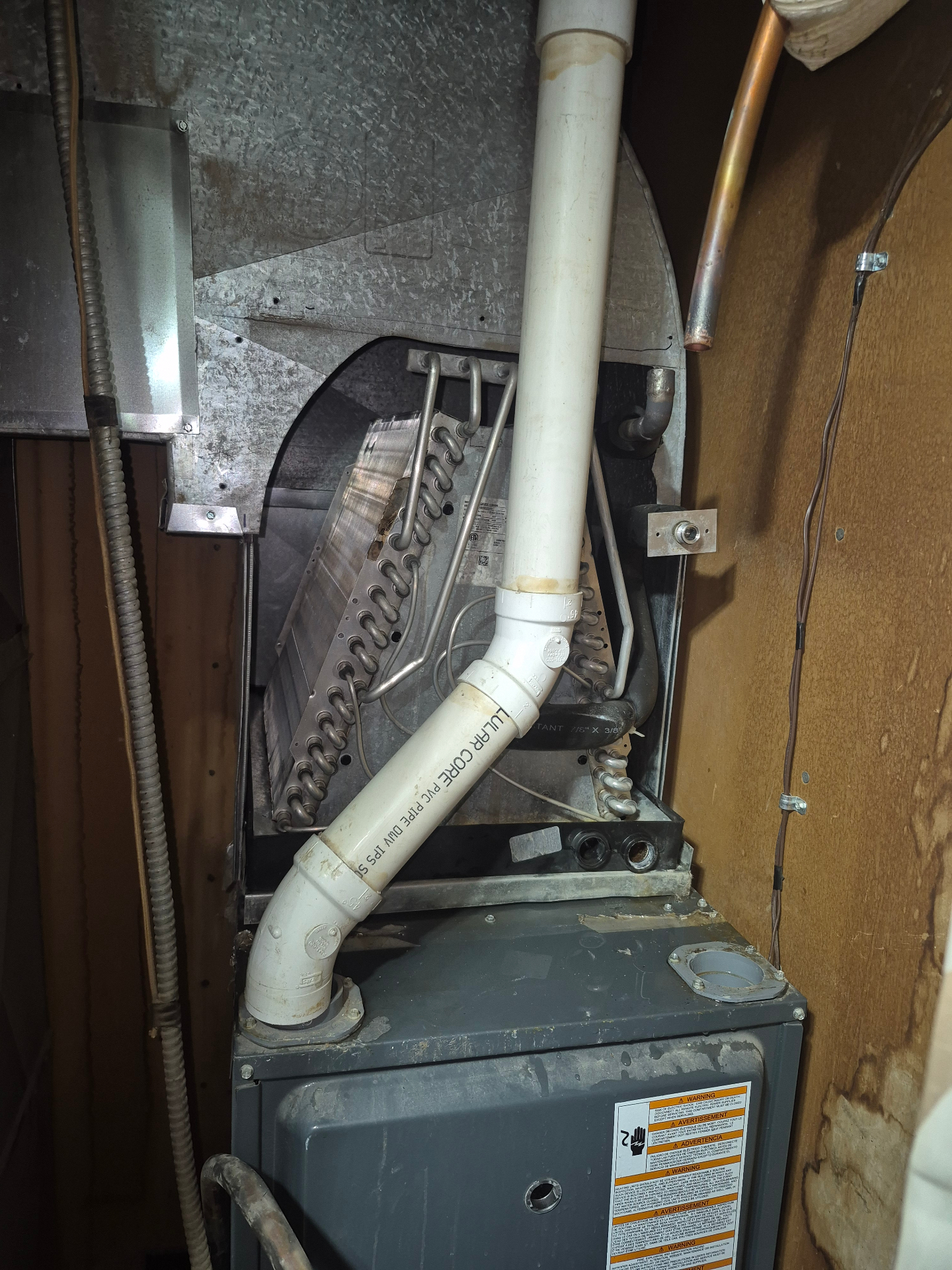
 before
The indoor unit as found — cabinet opened to access the evaporator coil section after the customer reported ice on the suction line.
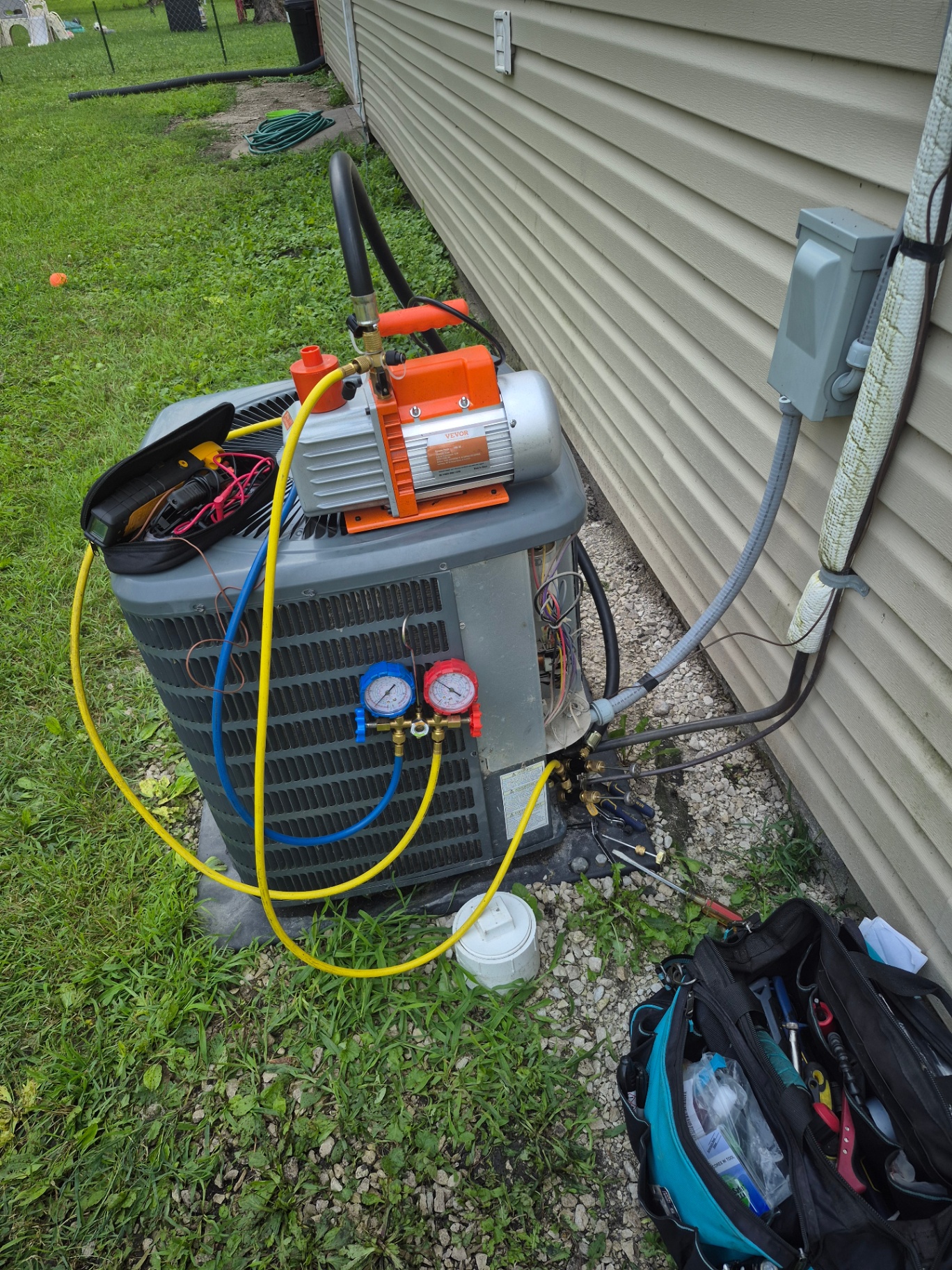 diagnosis
At the outdoor condensing unit with service equipment connected while working on the system.
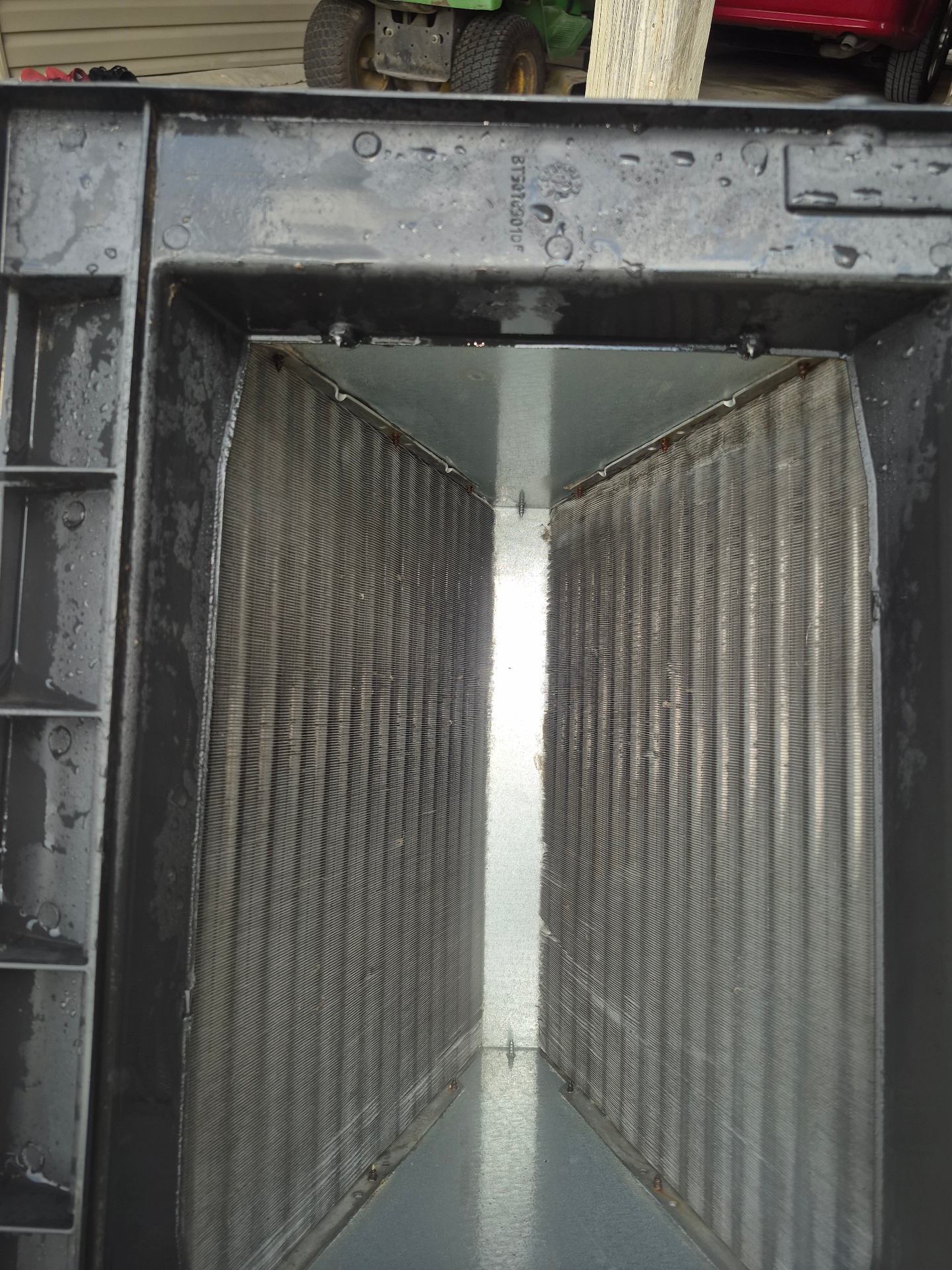 diagnosis
Inspecting the evaporator coil and the airflow path through the fins.
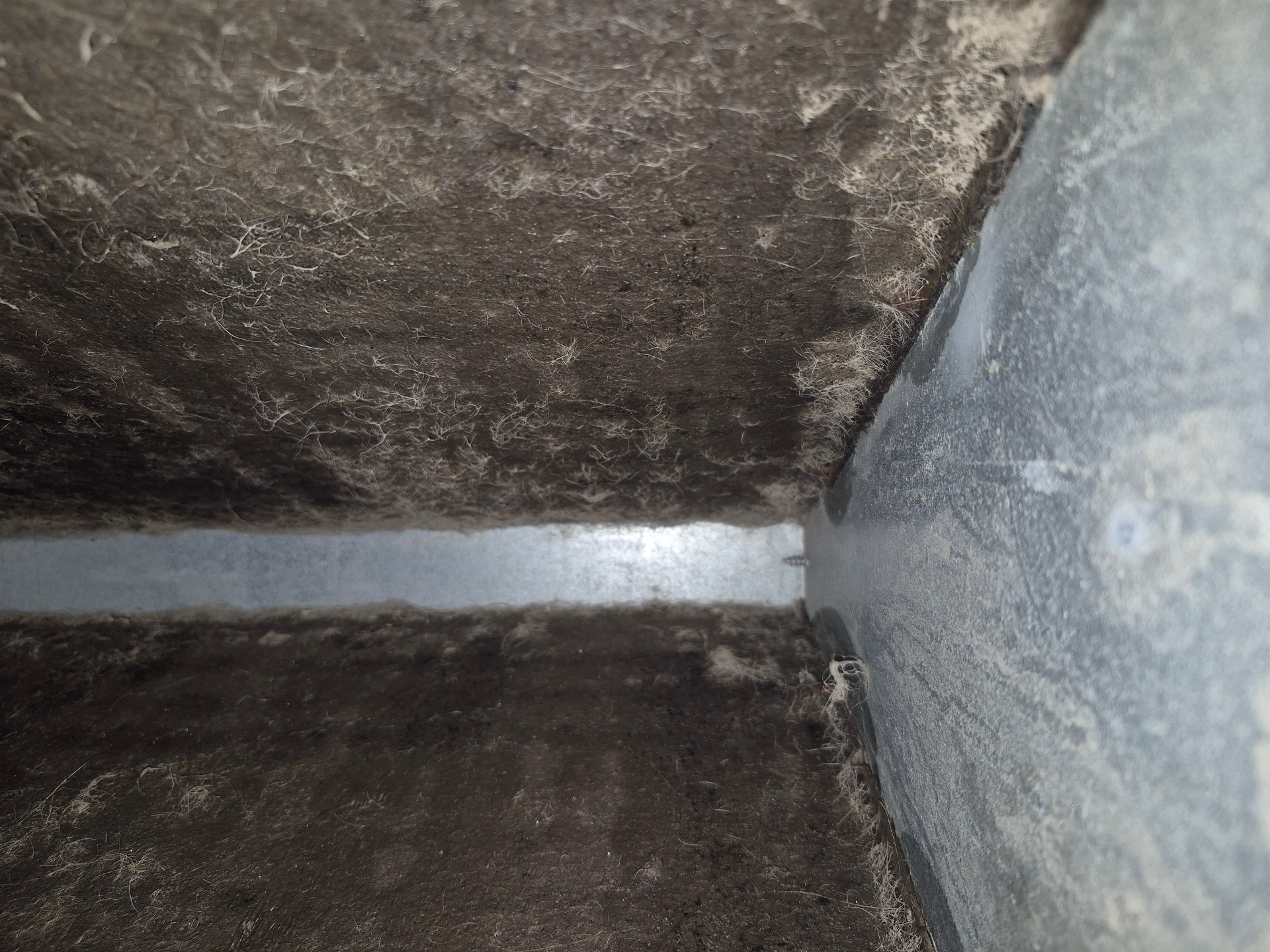 cleaning
The restriction — a heavy buildup of dust, debris, and airborne contaminants matted across the coil face, blocking airflow.
The customer's complaint
The homeowner called because the A/C was not cooling well and ice was forming on the copper suction line running to the outdoor unit. The system was running for long stretches without keeping the house comfortable.
What I found during the diagnostic
- Ice present on the suction line and at the evaporator coil.
- The evaporator coil face was heavily loaded with dust, debris, and airborne contaminants packed into the fins.
- Airflow across the coil was clearly restricted by the buildup on the coil surface.
- The air filter was overdue for replacement.
- No failed electrical components were found — the restriction on the coil was the issue addressed.
Why the problem happened
An evaporator coil needs a steady volume of warm indoor air moving across it to absorb heat. When dust and debris blanket the fins, that airflow drops.
With less warm air crossing the coil, the refrigerant inside stays too cold. The coil surface can fall below freezing, and moisture condensing on the fins turns to ice instead of draining away.
Once ice forms, it blocks even more airflow, so the condition tends to get worse until cooling drops off noticeably.
Buildup happens gradually. In many homes the coil loads up long before anyone notices a cooling problem, especially when filters go too long between changes.
What restricted airflow does to your system
A dirty coil is not just a cleanliness issue. Restricted airflow changes how the whole system behaves:
- Frozen evaporator coil and ice on the refrigerant lines
- Reduced cooling capacity — rooms that never quite reach the set temperature
- Longer run times, with the system rarely shutting off on hot days
- Higher energy consumption and noticeably higher summer power bills
- Extra stress on the compressor and blower motor, which shortens equipment life
- Water damage risk when a thawing coil overwhelms the condensate drain
Work performed and system tested
- Shut the system down and allowed the coil to fully thaw before working on it.
- Accessed and cleaned the evaporator coil, removing the buildup packed into the fin surface.
- Checked and cleared the condensate drain so melted water drained properly.
- Replaced the air filter and reviewed a realistic replacement schedule with the homeowner.
- Restarted the system and ran it through a cooling cycle to confirm normal operation with airflow restored and no ice returning on the suction line.
For homeowners with pets: not all filters are the same
Filters are not interchangeable. Two filters that fit the same slot can perform very differently — one may capture large lint particles only, while another captures the fine dander and hair that actually reach and stick to your evaporator coil.
The goal is balance. A filter that is too open lets hair and dander pass straight through and collect on the coil. A filter that is too restrictive for your equipment chokes airflow on its own and can cause the same freezing problem it was meant to prevent. The right choice depends on your system and your home.
If you have dogs or cats, plan on checking the filter monthly and replacing it more often than the box suggests. Holding a loaded filter up to a light is the simplest test — if you cannot see light through it, it needs to be changed.
- Check the filter every month in a home with pets; replace as soon as it looks loaded.
- Match the filter type to your equipment — ask before jumping to the highest-rated filter on the shelf.
- Keep return grilles clear of furniture, rugs, and pet beds.
- Vacuum near return vents regularly to reduce how much hair reaches the system.
- Schedule a professional coil inspection and cleaning as part of seasonal maintenance.
Preventive HVAC tip
If you see ice on your refrigerant line, turn the cooling off and leave the fan on so the coil can thaw, then check your filter. Running a frozen system pushes liquid refrigerant back toward the compressor and can turn a cleaning into an expensive repair. If the coil freezes again after a fresh filter, the coil itself needs to be cleaned and the charge and airflow verified.
Common questions
Why is ice forming on my AC line?
Ice on the suction line usually means the evaporator coil is running too cold, most often from restricted airflow caused by a dirty filter or dirty coil. Low refrigerant charge from a leak can cause the same symptom, so the system should be checked with gauges.
Can I clean my evaporator coil myself?
Light surface dust can be vacuumed, but a coil with heavy buildup needs to be properly accessed and cleaned. The fins bend easily, and improper cleaning can damage the coil or the condensate pan.
How often should I change my filter if I have pets?
Check it monthly. In most Fort Dodge homes with dogs or cats, filters need replacing every four to eight weeks during heavy cooling season rather than the three months printed on the package.
Do you service commercial equipment too?
Yes. Gerardo HVAC LLC handles residential and commercial HVAC, refrigeration, and ice machines across Fort Dodge, Webster City, Humboldt, Eagle Grove, and surrounding Iowa areas.